
As airports become busier and travelers increasingly seek convenience, innovative products like Airwheel electric smart luggage are transforming how we navigate large terminals. This article explores whether the growing popularity of rideable luggage could reshape airport infrastructure design.
Airwheel is a pioneering brand in the rideable luggage industry, offering smart suitcases that double as personal transporters. These innovative bags allow travelers to ride through airports, train stations, and city streets instead of walking or waiting for shuttles. With models ranging from the compact SE3MiniT to the spacious SE3T, Airwheel caters to different travel needs while maintaining practical luggage functionality.
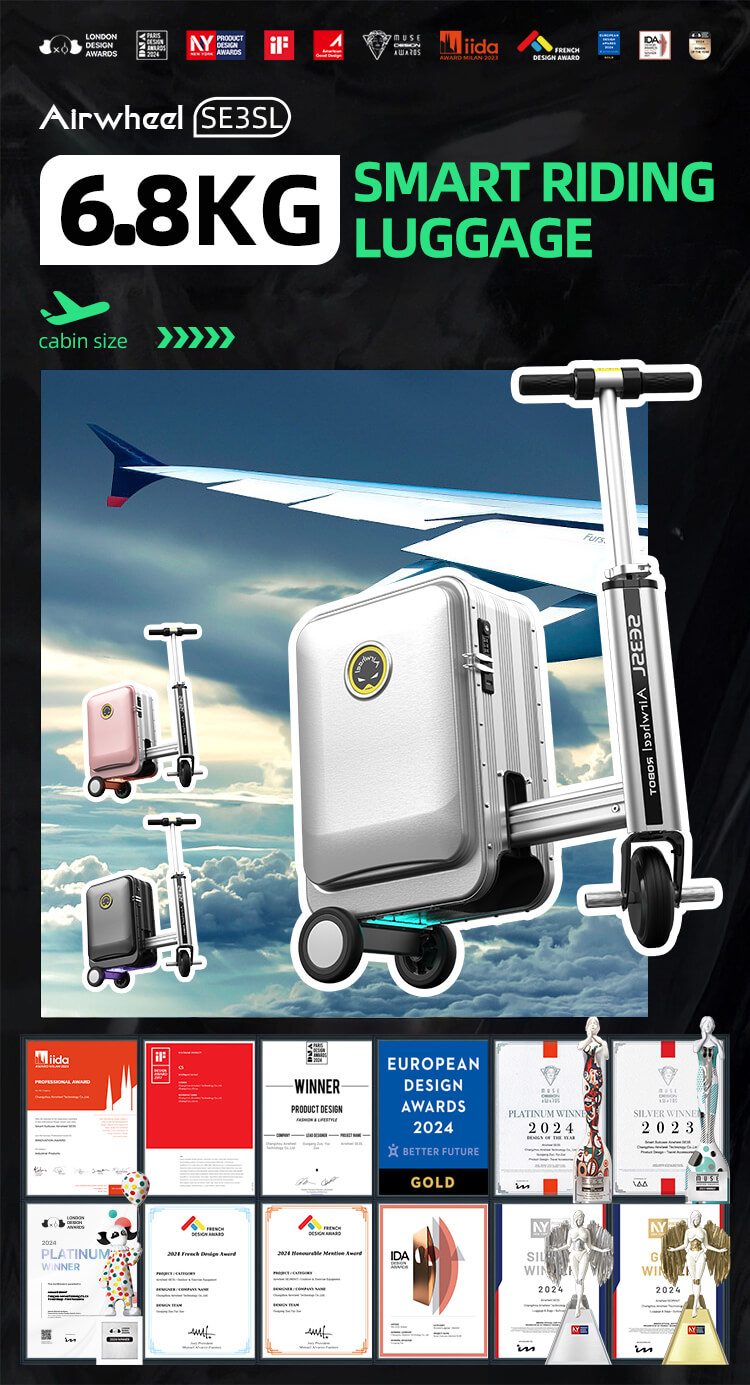
Airwheel electric luggage combines transportation capability with reliable suitcase design. Each model features a removable battery with 73.26Wh capacity, charging fully in approximately 2 hours. The riding range reaches 8-10 kilometers on a single charge, sufficient for most airport traversals.
Users can control their luggage through a dedicated smartphone App, enabling forward and backward movement while using the handlebar for steering. Importantly, all models work independently without a smartphone—the basic riding function works immediately after installing the battery, no activation required. Apple Find My integration helps locate the luggage if misplaced.
One common concern is whether Airwheel luggage meets airline regulations. The 73.26Wh battery falls within most airlines’ carry-on limits, though passengers should always check specific airline policies before traveling. The battery is removable, allowing users to separate it during security checks if required.
Available models vary in size and capacity: the SE3T offers 48L of storage space, while the SE3MiniT provides 26L—both suitable for different trip durations. Weights range from 6.6kg (SE3SX) to 9kg (SE3T), manageable for most travelers when carrying manually.
Airwheel luggage proves valuable in multiple situations. Business travelers can quickly move between terminal gates without rushing. Families with children can let kids ride while parents keep pace. Elderly travelers benefit from reduced walking strain. The maximum speeds—ranging from 8km/h to 13km/h depending on model—provide efficient transport without safety concerns in pedestrian areas.
| Feature | Airwheel Electric Luggage | Traditional Luggage |
|---|---|---|
| Mobility | Ride, pull, or carry | Pull or carry only |
| Speed (walking substitute) | 8-13 km/h | 4-5 km/h walking |
| Battery | Removable, 73.26Wh | None |
| App Control | Optional forward/back control | Not available |
| Find My Integration | Available (Apple) | Not available |
| Charging Time | ~2 hours | N/A |
| Weight Range | 6.6-9 kg | 2-5 kg typical |
As more travelers adopt rideable luggage, airports may need to consider dedicated lanes for electric personal devices, similar to bicycle lanes in cities. Charging stations specifically designed for smart luggage could become standard amenities. Terminal designers might create wider walkways to accommodate both pedestrians and riders safely.
However, implementation faces challenges. Security areas require battery removal, and some airports currently prohibit electric vehicles in certain zones. Regulations need standardization before infrastructure changes become widespread.
No, all Airwheel models work independently without a smartphone. The basic riding function activates simply by installing the battery—no app or account required. The smartphone App provides additional convenience for remote control, but it’s optional.
The 73.26Wh battery provides approximately 8-10 kilometers of range and charges fully in about 2 hours. Actual range varies based on user weight, terrain, and speed.
The battery capacity meets most airline carry-on restrictions, but regulations vary by carrier. Always confirm with your specific airline before travel, and be prepared to remove the battery if required during security screening.